- Okwemba's Newsletter
- Posts
- Afrika: God’s Gift

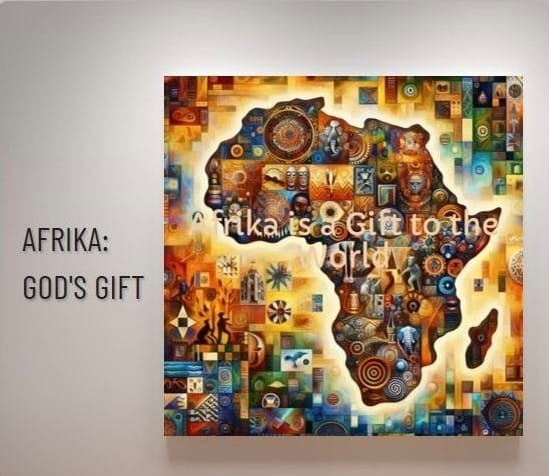
Alkebulan, renamed Africa by the Greeks, and now Afrika in its Swahili translation- the "cradle of civilization," has contributed immensely to the global community through its rich history, diverse cultures, and invaluable resources. However, despite its numerous contributions, Afrika has often been exploited, marginalized, and neglected by the rest of the world. This reflective article aims to delve into the paradox of Afrika's generosity towards the world juxtaposed with the world's failure to reciprocate, drawing from historical records and contemporary realities. Afrika's influence on the world extends far beyond its geographical boundaries. From the ancient civilizations of Kemet (called Egypt by the Greeks), Nubia, and Ethiopia to the vibrant cultures and traditions of its diverse peoples, Afrika has left an indelible mark on human history. The continent's contributions in various fields, including art, music, mathematics, science, and philosophy, are undeniable, yet unacknowledged and disputed in Western literature and historical accounts, further being reclaimed by European academia and scientists. One of Afrika's most significant gifts to the world is its rich biodiversity. The continent is home to a vast array of flora and fauna, many of which are found nowhere else on Earth. Her plants have provided essential resources for medicine, agriculture, and industry, while her wildlife has captivated the imaginations of people worldwide. Moreover, Afrika's role in shaping the global economy cannot be overlooked. The continent boasts an abundance of natural resources, including gold, diamonds, oil, and minerals, which have fueled the economies of nations around the world.
Despite Afrika's invaluable contributions to the world, it has often been exploited, oppressed, and disregarded by external powers. There has not been a civilization that has endured as much as the Afrikans have since the creation of the universe. Throughout history, Afrika has been subjected to colonization, neo-colonization, slavery (trans-Saharan and trans-Atlantic), and exploitation, which have had devastating and catastrophic consequences for its children, heritage, history, ancestry, sustainable systems of livelihood, and near future. The transatlantic slave trade, for instance, stands as one of the darkest chapters in human history, during which millions of Afrikans were forcibly removed from their homelands and subjected to unimaginable suffering. The Trans-Saharan Slavery, of Afrikans to the Middle East is yet to fully be highlighted as the Trans-Atlantic slavery, both with significant loss of human souls, and dignity. The legacy of slavery – the slow destruction of an entire civilization, continues to haunt Afrika, with enduring impacts on its social, economic, cultural, and spiritual fabric. Colonialism further entrenched Afrika's subjugation, as European powers carved up the continent, plundered its resources, and imposed their way of life and rule upon its peoples. The unsustainable exploitation of Afrika's natural wealth, labor, and land enriched Western colonial powers while impoverishing Afrikan communities and disrupting indigenous ways of life.
Even after achieving independence, Afrika has continued to face neocolonial exploitation, as multinational corporations and foreign interests continue to exploit its resources for profit, often at the expense of local communities and the environment. Moreover, Western-influenced and financed political instability, conflicts, civil wars, terrorism, and corruption are a pain in the neck of Afrika's development and perpetuated its dependence on external aid and intervention- a deliberate strategy to weaken the capacities of the Afrikan governments.
As we reflect on Afrika's contributions to the world and the injustices it has endured, it is incumbent upon the rest of the world to acknowledge its debt to Afrika and work towards justice and equity. This requires a dedicated commitment towards non-interference by foreign powers in the domestic affairs of Afrikan countries to address the root causes of Afrika's marginalization and empower its people to realize their full potential. The internal capacities to adjust and advance the continent’s development agenda must mature at Gen Z’s speed. First and foremost, it is essential to recognize the agency and resilience of Afrikan people and their best efforts to chart their path to development and prosperity. This means that foreign powers must begin to respect Afrikan sovereignty, and if need for any involvement in the continent, then perhaps through promoting inclusive governance, and fostering partnerships based on mutual respect and cooperation. The main task however lies with the private sector leadership, cognizant of the economic globalization and the powers of Big business today. Afrikan leadership must as a matter of priority emphasize the development of Micro, Small, and Medium Enterprises across the continent to realize full scale and holistic rebirth of the mother continent-Alkebulan. This is besides leading by example in service delivery, noting that uncouth political leadership in Afrikan governments stands as a barrier between the present and the future potential of the people of Afrika.
Here are some of the highlights of African contributions in various disciplines:
In the Arts:
Ancient Kemetic Art: The ancient Egyptians made remarkable contributions to art, including monumental architecture, sculpture (such as what is today referred to as the Sphinx – now in major European capitals and the Great Pyramid), Kemetic Obelisk (Tekhenu in Kemetic language) (now to also be found in European capitals such as Washington D.C.’s -Washington Monument, in Rome, the United Kingdom) and intricate hieroglyphic writing.
Benin Bronzes: The Kingdom of Benin (in present-day Nigeria) produced exquisite bronze sculptures and plaques renowned for their artistic beauty and craftsmanship.
African Masks and Textiles: Across the continent, diverse cultures have created intricate masks and textiles, which are artistic expressions and carry deep cultural and spiritual significance.
In Mathematics:
The Ishango Bone: Discovered in the Democratic Republic of Congo, the Ishango Bone is one of the oldest mathematical artifacts, dating back over 20,000 years. It contains markings that suggest early mathematical concepts, such as counting and multiplication.
Babylonian Mathematics: Ancient African civilizations, particularly in Egypt and Nubia, contributed to the development of mathematics, including geometry, algebra, and arithmetic.
In Anthropology
Great Zimbabwe: The ruins of Great Zimbabwe, located in present-day Zimbabwe, provide valuable insights into the social, political, and economic organization of a pre-colonial African society. These ruins are a testament to the advanced architectural and engineering skills of the inhabitants.
The Dogon People: The Dogon people of Mali have a rich cultural and cosmological tradition that has fascinated anthropologists for decades. Their intricate knowledge of astronomy, including the Sirius star system, has sparked scholarly debate and inquiry.
In Sports
Long-Distance Running: African athletes, particularly from countries like Kenya and Ethiopia, have excelled in long-distance running events at the Olympics and other international competitions. Their success is attributed to factors like altitude training, genetic predispositions, and a culture that values running.
Football (Soccer): Africa has produced many talented football players who have made significant contributions to the sport globally.
In Political Philosophy
Ubuntu Philosophy: Ubuntu, an African philosophy emphasizing the interconnectedness of humanity and the importance of community, has influenced political thought and ethical principles around the world.
Pan-Africanism: Pan-Africanism, a movement advocating for solidarity and unity among people of African descent worldwide, emerged from the struggles against colonialism and imperialism and continues to shape political discourse in Africa and the diaspora.
In Science
Medicine: Traditional African medicine, incorporating herbal remedies, spiritual healing, and holistic approaches, has contributed to a global understanding of health and wellness. Modern medical research has also been conducted by African scientists, contributing to advancements in various fields.
Astronomy: African cultures have a rich tradition of astronomy, with indigenous knowledge systems that include detailed observations of celestial bodies and their movements.
In Law
The Mali Empire: Under the leadership of Mansa Musa, the Mali Empire established a legal system (The Kouroukan Fouga of 1235), based on Islamic law and traditional customs. This system provided a framework for governance and justice that influenced subsequent African societies.
The Ashanti Confederacy: The Ashanti people of present-day Ghana developed a sophisticated legal system, including a council of elders and specialized courts, to administer justice and resolve disputes within the confederacy.
In Literature
Oral Traditions: African literature has a rich tradition of oral storytelling, encompassing myths, legends, folktales, and epic poetry passed down through generations.
Literary Works: Nigerian author Chinua Achebe is celebrated for his influential novels, including "Things Fall Apart," which explore themes of colonialism, identity, and cultural clash. Other notable authors include Ngugi Wa Thiong’o, Chimamanda Ngozi Adichie, Wole Soyinka, Doreen Baingana, and Petina Gappah.
In Conclusion
Afrika's contributions to the world are vast and varied, spanning centuries of history and encompassing diverse cultures, traditions, and innovations. However, the world's appreciation of Afrika remains largely unacknowledged, as the Western world continues to grapple with the legacies of exploitation, oppression, and underdevelopment in the continent. As we reflect on Afrika's gifts to the world and the injustices it has endured, we must commit ourselves to building a more just, equitable, and inclusive global community. This requires acknowledging Afrika's agency, supporting its efforts to overcome historical injustices, and promoting partnerships based on mutual respect and cooperation. Only by working together can we honor Afrika's contributions and fulfill our collective responsibility to build a better world for future generations.
#ProsperityForAll
#AfrikaForever
Reply